
Research
Lab Introduction
Creative thinking like the Sky, welcome to ideaSky!
Our lab focuses on the following fields: ground-based remote sensing, UAV (Unmanned Aerial Vehicle) carrying mini instruments, and investigating how aerosols influence Taiwan’s air quality and solar radiation balance.
Research the future applications of sustainable technologies in ( ) development, especially in the context of rapid global urbanization and achieving ( ) and (low-carbon emissions).
Professor Wang as the head of ideaSky, often offers professional development opportunities for our members, such as workshops, career coaching, and seminars to help them advance in their careers.
Fields & Categories
Ground-based Remote Sensing
- The Future of Sustainable Technology in ( ) Development
- Interdisciplinary Approaches to Climate Change Observation
- Advancements in ( ): Solar, Wind, and Beyond
UAV (Unmanned Aerial Vehicle) System
- UAV (Unmanned Aerial Vehicle) carrying mini instruments supporting observation experiences.
- Innovating inventions of UAV related patents.
Aerosols Influence & Taiwan’s Air Quality
- Lidar with UAV
- Lab develop mini instruments like Aerosound, Aerobox, Aeromount.
Solar Radiation Study
- Solar Radiation Balance and Sun photometer
- Taiwan BSRN
- APAC
Technology and Innovation
- Stay tuned for future developments.
Graphic Format
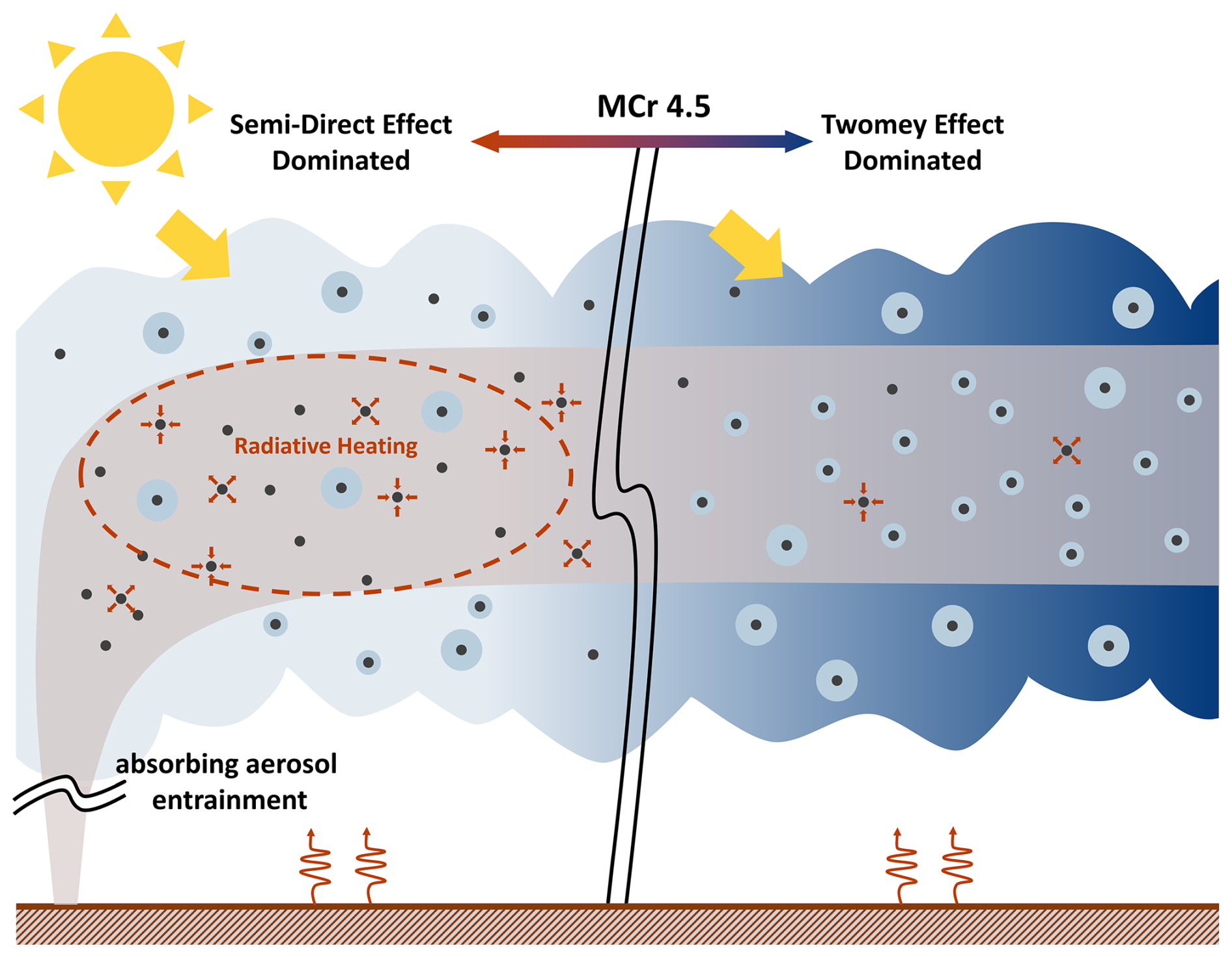
Separating the Twomey effect and the semi-direct effect in absorbing aerosol environments through the cloud-aerosol mixing ratio
Air masses carrying absorbing aerosols play a dual role by altering ambient supersaturation and acting as cloud condensation nuclei (CCN), thus contributing to both the semi-direct and indirect aerosol effects. However, in real cloud development processes, aerosol influences can simultaneously act to suppress cloud formation or enhance droplet production, resulting in microphysical characteristics that remain difficult to describe. In the study, an aerosol and cloud microphysics experiment, focusing on warm cloud events strongly coupled with biomass-burning aerosols transported from the Southeast Asia Peninsula, was conducted in the spring of 2024 at the Lulin Atmospheric Background Station (LABS, 2862 m a.s.l.) in Taiwan. One-minute resolution of in-situ data was used in the data analysis, allowing exploration of the microphysical responses under varying mixing states of absorbing aerosol concentration and cloud liquid water content. This study applies the cloud-aerosol mixing ratio (e.g., mass concentration mixing ratio (MCr), in conjunction with the ACI index to describe the behavior of aerosol-cloud interactions. Results identify two distinct responses: (1) under high MCr conditions (MCr>4.5), clouds exhibit features of the Twomey effect (); (2) under low MCr conditions (MCr=3–4.5), not only is the less than −0.06, but the high aerosol loading also coincides with elevated temperatures, lower relative humidity, and a reduction in small droplets (<10 µm), consistent with a semi-direct effect. This study provides a comprehensive explanation of how absorbing aerosols influence cloud systems over East Asia and highlights the critical role of the cloud-aerosol mixing ratio in characterizing the microphysical responses associated with the Twomey effect and the semi-direct effect.
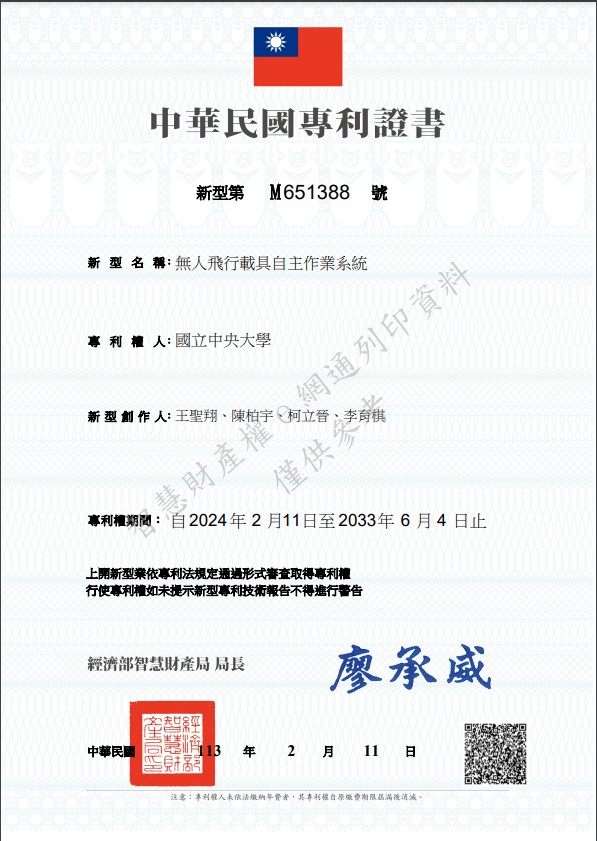
Congratulations to getting the Utility Model Patent for UAV automatic battery swapping system
Congratulations to ideaSky! We collaborated with CWA an […]
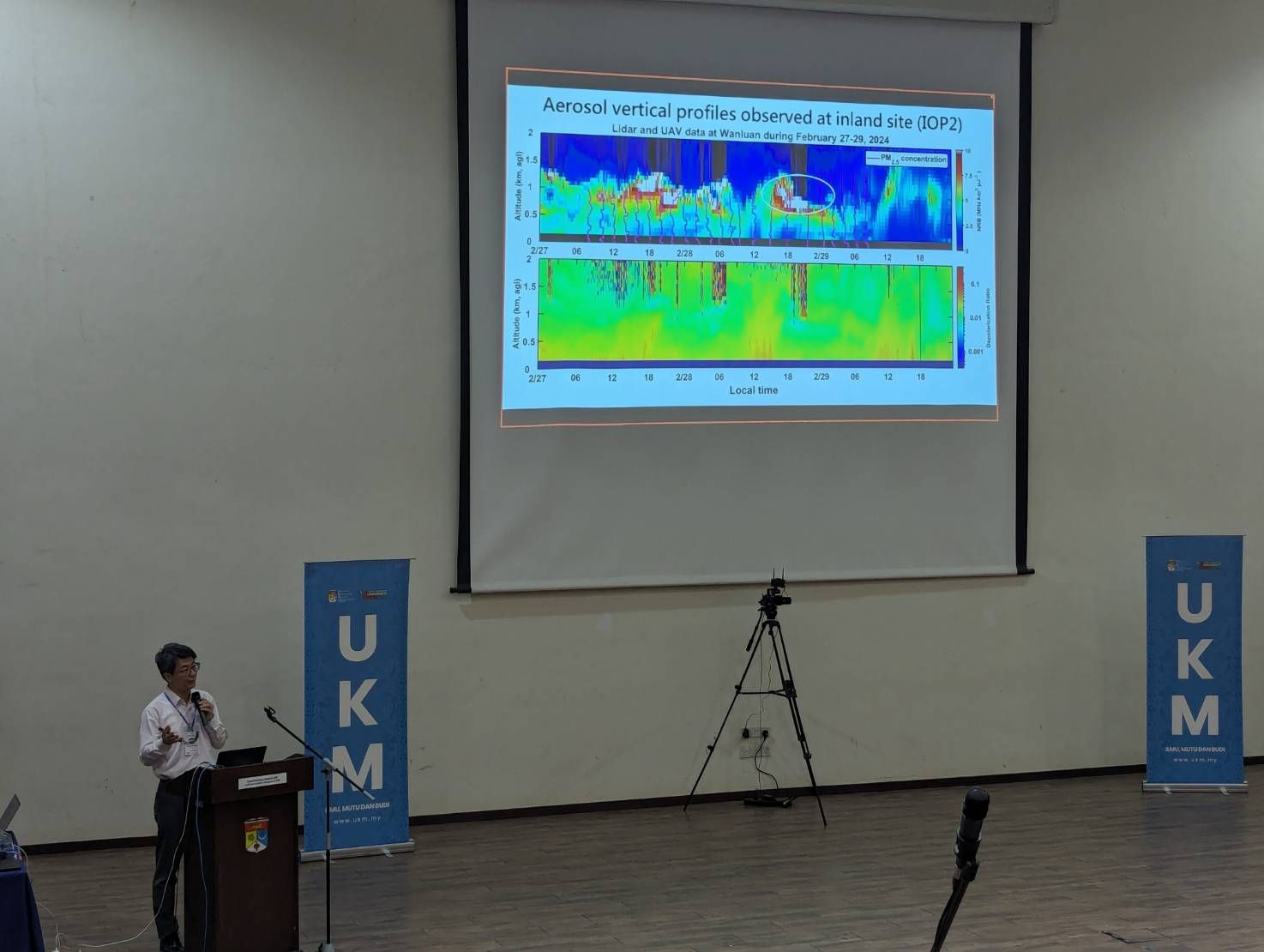
Attending Asia AQ at Selangor, Malaysia
Professor Wang and our ideaSky group attended the Asia […]
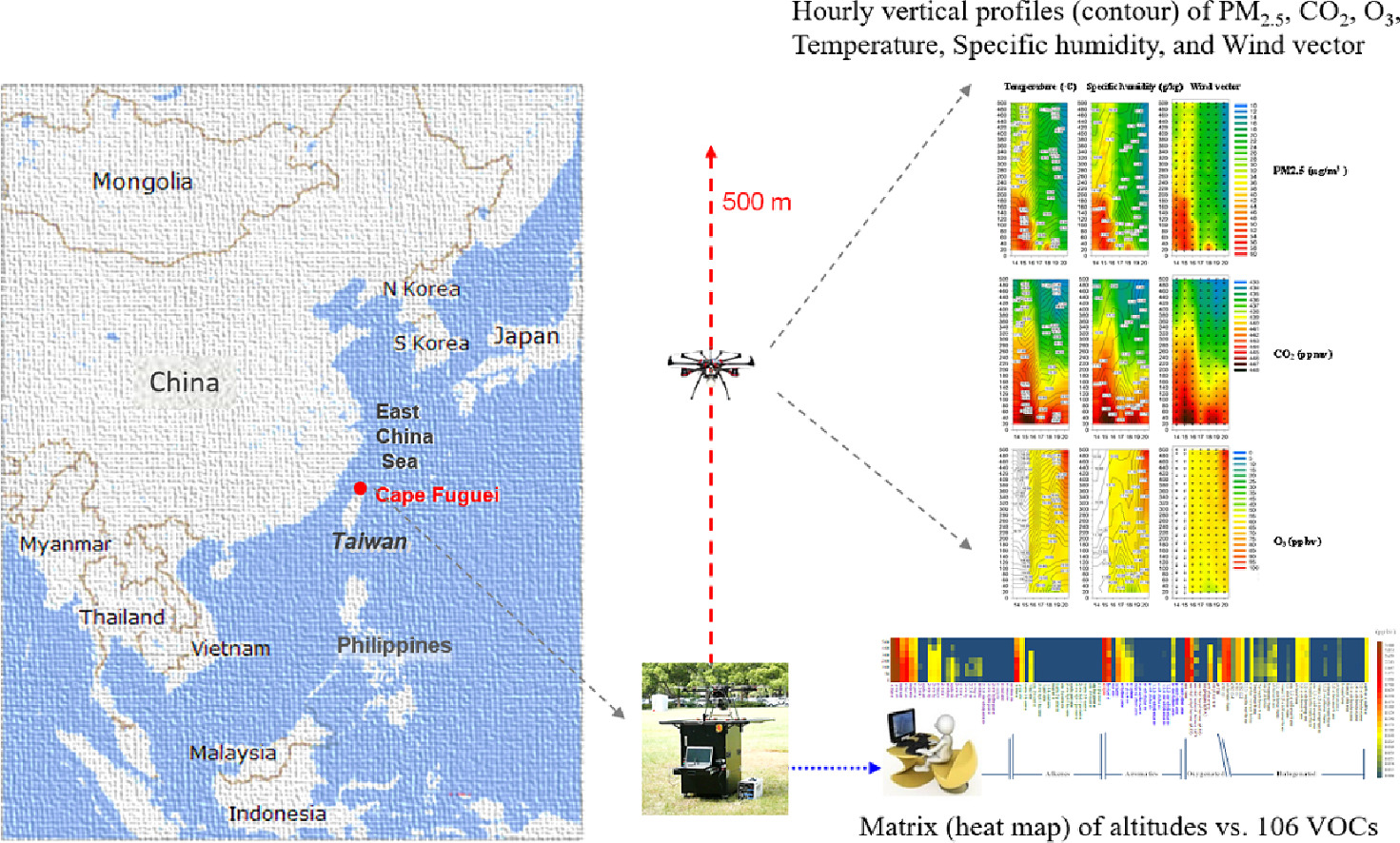
Spatiotemporal characterization of PM2.5, O3, and trace gases associated with east Asian continental outflows via drone sounding
29 Apr. 2024 Abstract East Asian continental outf […]